
More Downloads, No Revenue? The Podcast Monetization Problem
Hey Podcast Fam,
Your numbers are climbing. More plays, more followers, maybe a few listeners messaging you about a favorite episode. That's real progress, and it deserves to be celebrated.
But if your revenue hasn't moved alongside those numbers, you're not alone.
Downloads and income are connected, but they aren't the same thing. Understanding the difference is the first step toward building a podcast with real earning potential.
The Download Trap
Downloads are an important measure of podcast growth. They help establish your reach, demonstrate audience demand, and show how your content is performing over time.
But audience growth and revenue growth are two different things.
A podcast averaging 1,000 downloads per episode might generate income through advertising. Another show with the same audience size might generate business leads, sell premium subscriptions, or create opportunities for paid events.
Both podcasts reach a similar number of listeners, but their earning potential depends on how they've chosen to build their business.
Downloads are also only one part of the picture. Listener retention, engagement, and audience behavior can reveal what people actually value about your show. Understanding how podcast analytics work can help you identify those patterns and make more informed business decisions.
The question isn't just how many people are listening. It's what opportunities your podcast is creating and how you can turn those opportunities into revenue.
That's where understanding your business model becomes important.
What More Downloads Actually Mean for Advertising
Advertising is one of the most familiar ways to monetize a podcast, and growing your audience can increase what advertisers are willing to pay.
Most traditional podcast advertising uses CPM, or cost per 1,000 advertising impressions.
In podcasting, qualifying downloads are commonly used to estimate how many impressions an advertisement can deliver.
The calculation is straightforward:
(Eligible ad impressions ÷ 1,000) × CPM = Gross value of one ad spot
According to Libsyn Ads' podcast advertising guide, a 60-second host-read advertisement typically commands approximately $24 to $26 CPM.
Here's what that looks like using a hypothetical $25 CPM, with one sold advertising spot per episode on a weekly podcast.
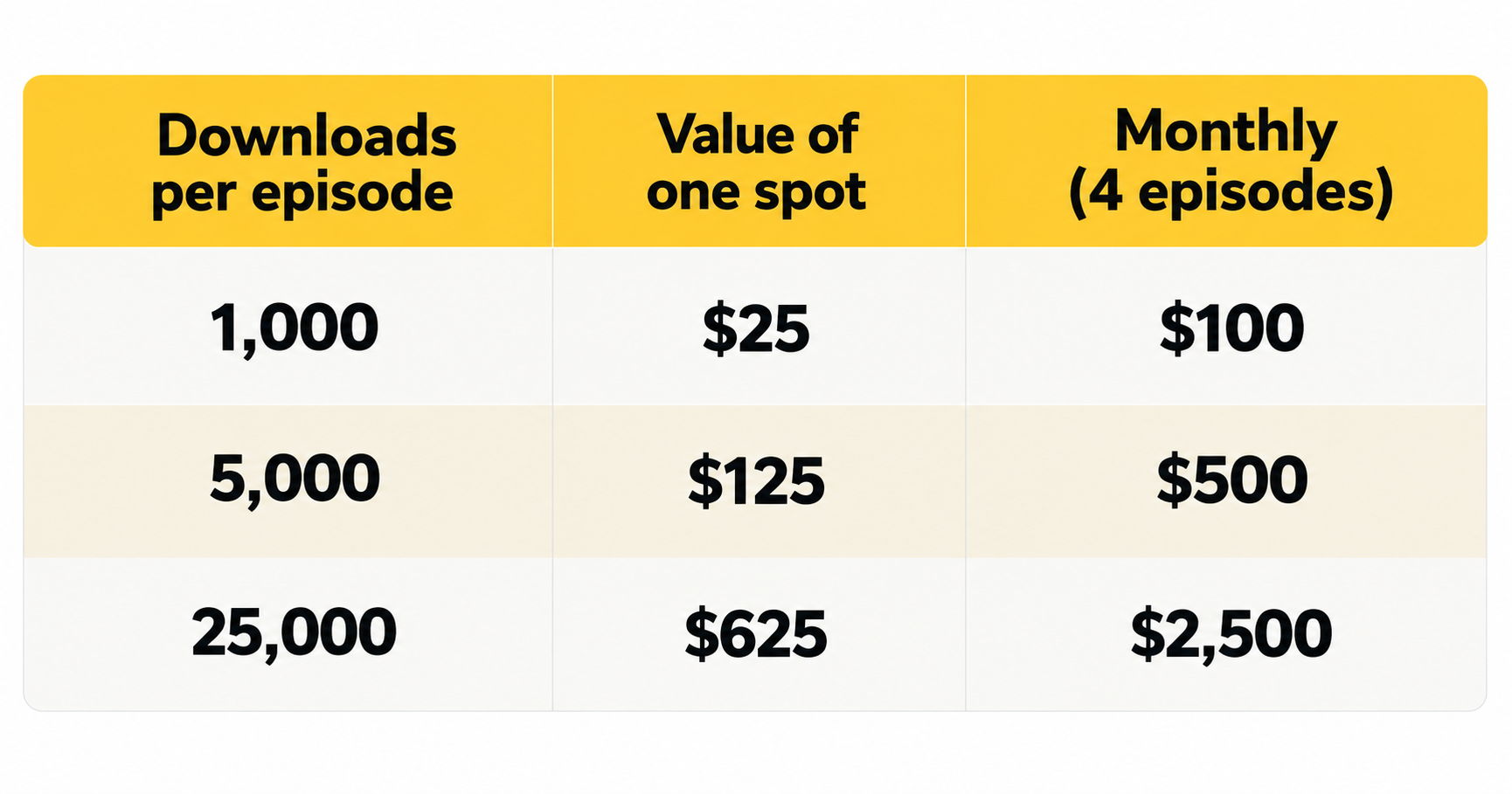
These figures represent potential advertising revenue before commissions, production expenses, and other operating costs.
For a podcast averaging 5,000 qualifying downloads per episode, one weekly advertising placement could generate approximately $500 per month.
Actual advertising rates depend on your audience, format, and the type of placement you're offering. For a closer look at how those factors influence pricing, explore our guide to podcast sponsorship rates in 2026.
That provides perspective on how traditional advertising works. It's also why many independent podcasters explore additional revenue opportunities as their shows develop.
According to the IAB/PwC Internet Advertising Revenue Report, U.S. podcast advertising revenue reached approximately $2.86 billion in 2025, an increase of 17.6% over the previous year.
The podcast advertising industry continues to grow, but advertising is only one way a show can generate income.
The Same Audience Size, Different Earning Potential
Consider two podcasts, each averaging 1,000 downloads per episode.
Podcast A: An entertainment show featuring conversations about pop culture, music, and everyday experiences.
Podcast B: A business-focused podcast hosted by a consultant who shares professional insights and interviews industry experts.
Both have the same reach, but they may have very different revenue opportunities.
Podcast A could develop paid memberships, host live experiences, create merchandise, or establish partnerships with entertainment and lifestyle brands.
Podcast B might attract consulting clients, sell workshops, develop professional resources, or generate speaking opportunities.
Neither model is inherently more valuable.
Their earning potential depends on their audience, what listeners find valuable, and how effectively each show connects that value to an appropriate offer.
This is an important distinction because a podcast can contribute to your income even when the money isn't coming directly from advertising or the podcast hosting platform.
A listener who becomes a paying client, attends a live event, or purchases a product represents economic value generated through the show.
The relationship listeners have with a host can influence those opportunities, too. As we explored in our breakdown of The Podcast Study 2026, listener trust and engagement are important parts of understanding a podcast's value beyond its download count.
The takeaway is that podcast monetization looks different depending on what you're creating and who you're creating it for.
Understanding those differences can help you choose a more realistic path toward earning revenue.
Find the Revenue Model That Fits Your Podcast
Every podcast has its own strengths.
Some creators have professional expertise people are willing to pay to access. Others build communities around entertainment, storytelling, shared interests, or meaningful conversations.
Those differences influence which revenue opportunities are worth pursuing.
Consider what brings people to your show.
Are they coming for your expertise? Your personality? Your guests? The community you've created? A particular subject they care deeply about?
Your audience's reason for listening can help reveal what they're most likely to value beyond the free episode.
Here are six revenue models to consider.
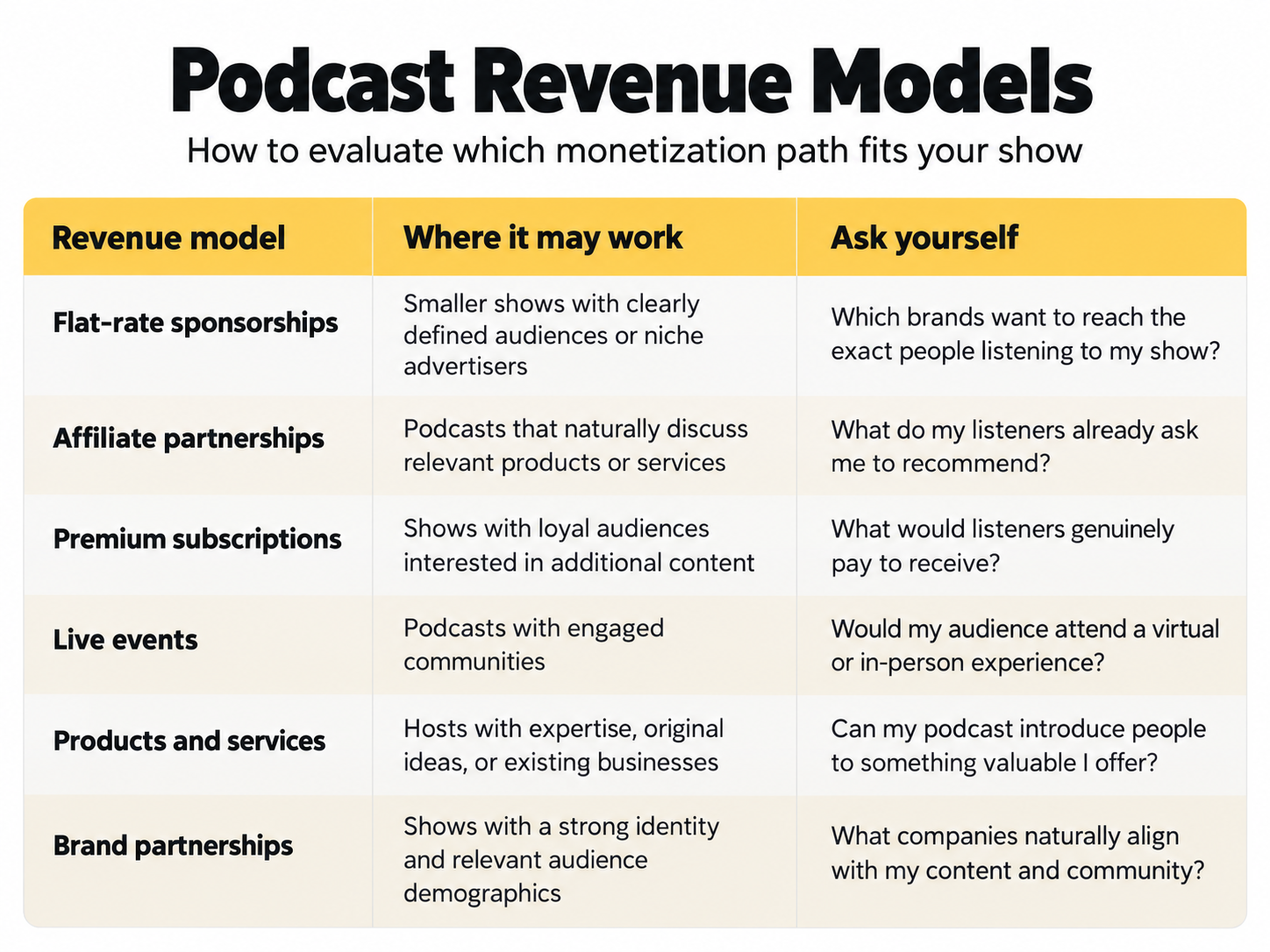
For creators with engaged communities, listener-supported revenue may be worth exploring. Podcast memberships, for example, can create recurring income through bonus episodes, exclusive experiences, and other benefits that loyal listeners value.
The goal isn't to launch six revenue streams at once.
It's to identify which opportunities match your audience, your goals, and the resources you have available.
Four Things to Consider Before Choosing a Revenue Model
1. Audience Fit
Your monetization strategy should connect naturally to the reasons people listen.
An educational podcast may have opportunities to sell workshops or professional resources. An entertainment podcast might build a premium membership or host live events.
Consider what listeners already appreciate about your show and whether there's an experience, product, or service they'd be interested in supporting.
2. Reach vs. Engagement
Different revenue models reward different strengths.
Traditional CPM advertising relies heavily on the number of qualifying impressions delivered.
Subscriptions, services, and community experiences depend more on audience interest, engagement, and willingness to pay.
A smaller audience with a specific need can sometimes support a meaningful business opportunity. A larger audience may create greater earning potential through advertising and partnerships.
Understanding where your show has the strongest advantage can help you decide what to pursue first.
3. Production Capacity
Every revenue opportunity has an operational component.
A premium subscription may require consistent bonus content. Live events involve planning and coordination. Consulting services require dedicated time.
Choose opportunities you can realistically maintain while continuing to produce your podcast.
A good monetization model should support the long-term health of your show.
4. Time to Revenue
Some revenue streams can be tested with relatively little upfront investment.
Affiliate partnerships and smaller flat-rate sponsorships may be accessible early, provided you can find interested partners.
Courses, products, memberships, and events may require more planning, development, and marketing.
Consider both the resources needed to get started and how long it may take to see a return.
Revenue Is Only Half the Equation
Generating revenue is an important milestone.
Understanding profitability is what helps you determine whether your podcast can support its ongoing production.
Revenue is the money your podcast earns. Profit is what remains after its expenses are accounted for.
Before setting a revenue goal, it helps to understand what you're investing in each episode. Our podcast production cost breakdown explores the expenses involved in recording, editing, and producing a show, giving you a useful starting point for calculating your own operating costs.
Let's look at a simple example.
Suppose your podcast generates $1,000 per month through a combination of sponsorships, affiliate partnerships, and paid subscriptions.
Your monthly production expenses look like this: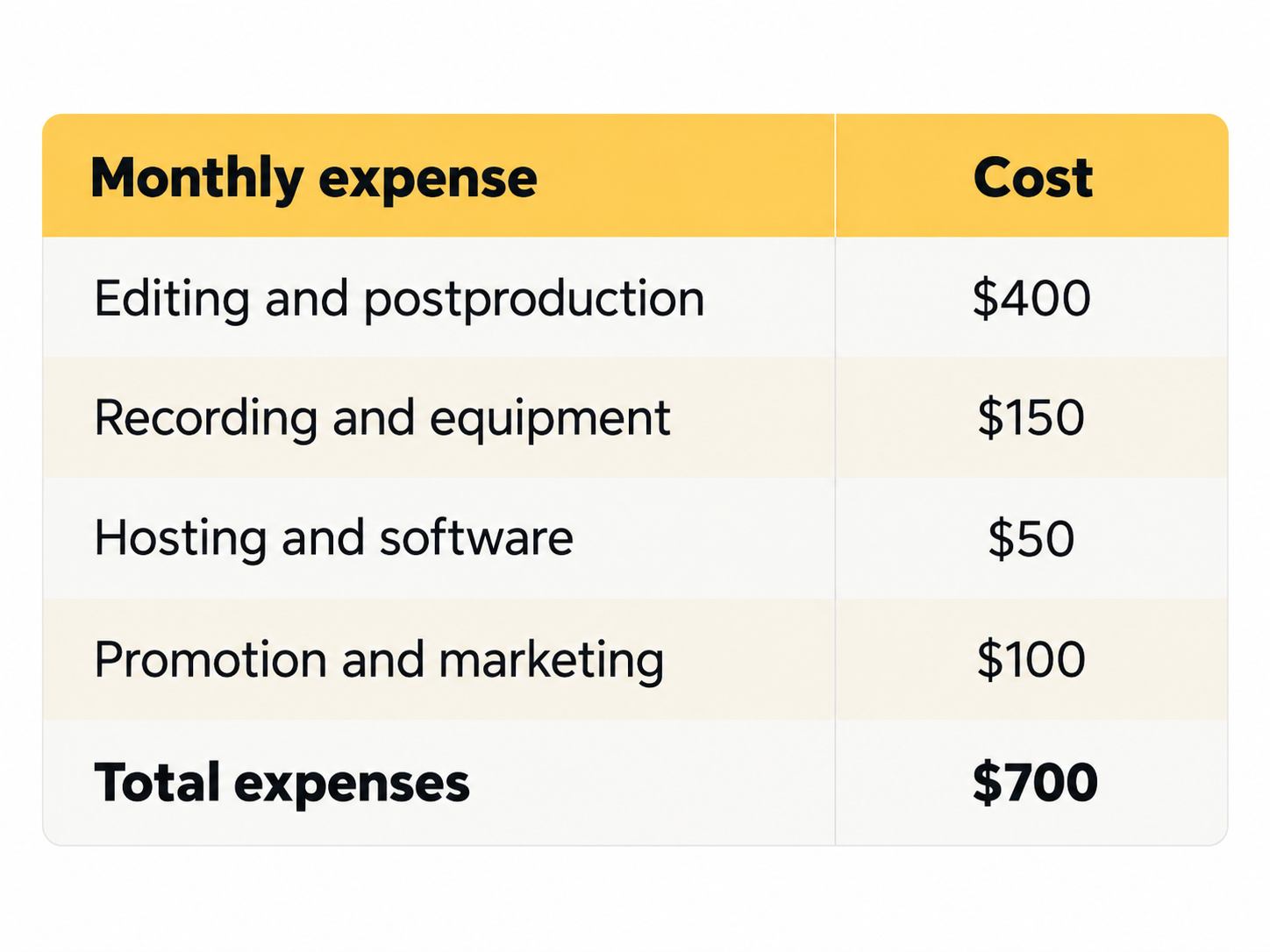
That leaves $300 in monthly operating profit before taxes and any additional expenses, including compensation for your own time if it hasn't already been included.
Now imagine introducing another revenue stream that generates an additional $300 monthly while requiring only $50 in additional expenses.
Your monthly revenue increases to $1,300, expenses rise to $750, and operating profit becomes $550.
That's an example of how a podcast can improve profitability by developing an additional revenue opportunity without needing a proportional increase in audience size or production spending.
This is also why production decisions matter.
More frequent episodes, additional production services, and increased marketing can all support growth. The important question is whether those investments make sense for your show's current goals and financial position.
Research from Podchaser found that among serious podcast launches with at least four episodes, shows publishing approximately every two weeks had a higher observed survival rate than those publishing daily or weekly.
That doesn't mean biweekly publishing guarantees success, or that every podcast should reduce its release schedule.
It does reinforce the importance of finding a production rhythm you can sustain.
A consistent publishing schedule also gives creators a foundation for developing stronger listener habits over time. Our article on why podcast consistency beats virality takes a closer look at the relationship between regular publishing and long-term audience development.
A financially healthy podcast balances earning potential with the resources required to keep producing it.
Five Steps Toward a More Profitable Podcast
You don't need to wait until your next major download milestone to start building a stronger financial foundation.
Here are five steps you can take now.
1. Know Your Real Cost Per Episode
Start by identifying everything required to produce and distribute your show.
Include recording, editing, hosting, equipment, artwork, guest coordination, promotion, and the time you invest.
Calculate your average cost per episode and your monthly operating expenses.
This gives you a clearer picture of how much revenue your show needs to cover its costs and eventually generate profit.
2. Get Specific About Your Audience
Look at your podcast analytics, audience demographics, episode performance, comments, and listener feedback.
Then consider three questions:
- Who is listening?
- Why do they return?
- What interests, needs, or challenges do they share?
A short listener survey can help you understand what your audience values and which additional experiences or offerings might interest them.
3. Choose One or Two Revenue Models to Test
Review the revenue opportunities available to you and choose those that best match your audience and resources.
For example, a podcast hosted by a business professional might test a paid workshop or consulting offer.
An entertainment-focused show could explore a small live event or premium subscriber experience.
Start with a clearly defined offer, establish what success would look like, and give yourself a reasonable period to evaluate demand.
4. Measure Revenue and Expenses Alongside Downloads
Continue tracking audience growth, but expand your performance dashboard to include financial results.
Useful metrics include:
- Monthly podcast revenue
- Average production cost per episode
- Revenue generated by each income stream
- Monthly operating profit
- Audience growth and engagement
Tracking these figures together makes it easier to understand which activities are contributing to your show's financial progress.
5. Review Your Strategy Before Expanding
As your podcast develops, regularly evaluate which investments and opportunities are producing meaningful results.
Which episodes consistently attract listeners? Which revenue streams are gaining traction? Are your production expenses aligned with what you're earning?
Use those insights to make informed decisions about adding episodes, developing new offerings, increasing marketing, or investing in additional production resources.
If your next step includes refining your audience-development strategy, our 30-Day Podcast Growth Reset offers a practical weekly plan for reviewing your performance, identifying opportunities, and testing improvements.
Sustainable growth comes from understanding what works for your particular show and building on it.
The Takeaway
Growing your podcast audience is an achievement worth celebrating.
More downloads can increase visibility, create opportunities for partnerships, and expand your potential advertising revenue.
But a podcast's earning potential extends beyond the number of people pressing play.
Your audience, expertise, community, content, and professional relationships can all contribute to a business model that makes sense for your show.
The opportunity is to understand which of those strengths can generate income, choose a realistic way to develop them, and manage your production costs along the way.
You don't necessarily need a bigger audience to start earning. You need a clearer understanding of the audience you already have and a strategy for creating commercial value around it.
Profitability starts with knowing what you want your podcast to accomplish financially and building a plan to get there.
Happy Creating
-----
Frequently Asked Questions
How many downloads do you need to make money podcasting? There's no universal minimum. Traditional CPM advertising generally becomes more financially attractive as eligible downloads increase, but smaller podcasts may generate revenue through affiliate relationships, niche sponsorships, memberships, professional services, or other audience-aligned offerings.
Can a podcast make money without sponsors? Yes. Podcasts can generate revenue through premium subscriptions, paid events, merchandise, affiliate commissions, products, consulting, courses, and other services. The best approach depends on the show's audience, content, and business goals.
What's the difference between podcast revenue and podcast profit? Revenue is the total income a podcast generates. Profit is the amount remaining after accounting for operating expenses. A podcast generating $1,000 per month with $700 in expenses has $300 in operating profit before taxes and any other unaccounted costs.
What is CPM in podcast advertising? CPM stands for cost per mille, meaning the cost per 1,000 advertising impressions. In podcasting, qualifying episode downloads commonly serve as the basis for estimating those impressions. At $25 CPM, 5,000 qualifying ad impressions would generate $125 in gross revenue for one sold ad placement.
What's the best way to monetize a new podcast? Begin by understanding your audience, your production expenses, and what you want the podcast to accomplish. Then test one or two revenue models that fit your content and available resources. Measure the results and refine your approach as the show develops.
